



One way to deepen a meditation practice is to share it. I don’t mean tell someone about it. I mean guide them.
You might panic at the thought. (I did – more on that below.) Assume you’re not worthy, as though guiding meditation were an esoteric mystery requiring years of yogic cave-dwelling: “Only once I have purified the golden reaches of my True Self and defeated the demons of Mara can I come down from this mountain and share my wisdom with regular mortals.”
But you don’t need to be an expert meditation teacher to share a simple practice any more than you need to be an expert cook to show someone how to boil an egg.
“In a light way, pay attention to X. If your mind wanders, come back.”
Seventeen years ago, my teacher Shinzen Young suggested I guide meditation. I told him I wasn’t qualified, that I was still learning. I also told him I was mentally deranged, and then I rolled my eyes like a mad horse.
He said that’s exactly why I should do it – the world needs more ignorant, deranged, vigorously horsey role models. No, he didn’t say that. But he did say it was good for me to recognize my own fallibility, how none of us knows much in the big scheme of things, and what we do know is imperfect and incomplete. He said that shouldn’t stop us from acknowledging what we do know.
So I started to guide. It worked out.
Question: What do you know about meditation?
If you know how to close your eyes and follow the breath for a while, and how not to get too uptight about thoughts, and how to let things be imperfect … well, if someone asks, those are solid tips.
That’s the accessible end of practice. There’s also a diverse creative end. I used to host workshops that encouraged people not just to share practice, but also to invent them.
In groups of two or three, people would take turns guiding each other in simple ten-minute practices of their own design. I was always moved by the personality and originality of what emerged.
Intentional practice can be reconfigured in many ways, across many forms. It’s a powerful creative medium because it works directly on your in-the-moment experience of reality. Some practices involve a lot of instruction. Others, very little. Each practice is a mystery when you guide, because you never quite know how it will land. Also, it’s never about you. Understanding how it is never about you is both the guide’s primary learning, and their primary teaching. It’s part of the mystery. Because … who or what IS it about?
As we get more experience with the core skills of meditation, we develop more confidence around how to customize practice to work for us. This can lead to more curiosity about others. What does this person need? What practices do they already do? What difficulties have we personally encountered – and what have we done – and how might all that be relevant for this particular human sitting in front of us?
I get emotional watching people take turns caring for each other through guiding. I can see their unique quirks and hard-won truths start to come through.
Sharing practice has changed me. I can’t believe I get to do this. The trust of my fellow humans, their bravery and sincerity. It feels like I get more than I give, like the healing itself has no boundaries. It’s like a wave around the room, a wave around the world. Each new guide is a lineage in waiting.
Obviously, we still want experienced teachers. We want them to help us navigate specific challenges and techniques and traditions. We want all levels of professionals. And, when it comes to connection and love and the capacity to be present with each other, we want everyone else, too.
Healing and growth, self-regulation and self-understanding — these things are too idiosyncratic, too personal, too fundamental to depend on specialists-only. We also need to depend on ourselves and one another.
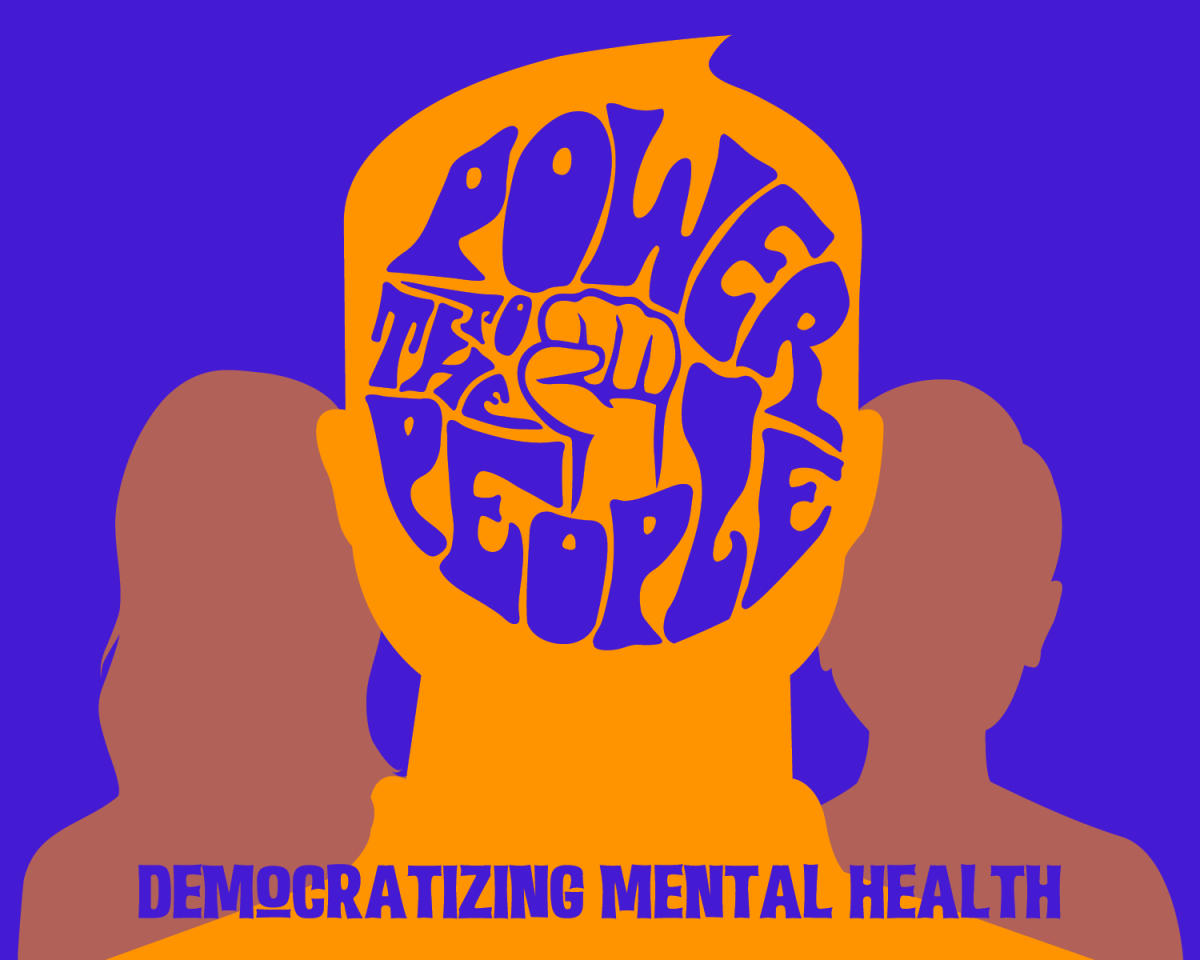
In my mind, nothing will accelerate this more than re-casting “teaching” as a creative social activity that any informed person can engage in. This is the democratization of mental health.
Release the amateurs!

Today’s guided meditation offers a few tips on how to guide a friend in a simple practice. If someone asks, try it out and see what happens. And share how it goes in the comments!
Much love!
Jeff
PS – One way to make mental health practices and support structures more accessible is to start your own modest meditation group with a few friends, and then learn from each other. To that end, download my free kit. A life of practice has incalculable benefits. We can help each other get started.

A Seven Minute (or so) Meditation Script For Beginner Guides
INTRO
Imagine a friend or co-worker or family member says “You meditate, right? Can you show me how?” At first, you say, “I am not worthy, for I have not yet reached the depths of enlightenment attained by my guru, Jeff Warren, a radiant being whose perfect words dribble like golden nectar down his chin and into his beard.”
Your friend says … “Ew.” Then they say, “Even so, I’m interested. Can you share the basics?”
So … you do. Because you don’t need to be a professional meditation teacher to share a basic meditation any more than you need to be an expert chef to boil an egg.
As a guideline, try this simple script. A bit of framing off the top can be helpful, something like: “So you’re going to sit there and not do much. Your mind will probably think the whole thing is boring or trivial or impossible. Try to ignore those thoughts and do it anyway.”
Let’s go.
MEDITATION
Eyes can be open or closed, whatever feels comfortable. Sit or lie down. If lying down causes you to fall asleep, then sit up. Take a few slow, deliberate breaths. Maybe extend the exhale a bit. Imagine as you breathe out that you’re also breathing out any uptightness. Let things be imperfect.
(10 seconds silence)
Choose a simple sensation to pay attention to. Maybe the feeling of the breath at your nostrils, or a sense of your whole body sitting. Or a sound — the hum of a refrigerator, wind in the trees. We call this a Home Base. Choose a Home Base, and then stay for a while.
(30 seconds silence)
Mind wanders. That’s normal. Bring it back to your Home Base. You’re being present with not much happening. Can you pretend not doing anything is kind of satisfying?
(45 seconds of silence)
Mind wanders. You come back. If there are lots of thoughts and feelings, no need to get rid of them. See if you can have an easygoing, companionable attitude towards all of it, like: “Welcome thoughts, please hang out in the background while I return to my Home Base.” Keep going.
(45 seconds of silence)
Face relaxed. Dropping any agendas. You’re just existing without needing to prove yourself.
(60 seconds silence)
CONCLUSION
When you’re ready, open your eyes.
That’s it. Congratulations, you meditated! Then you can say: “I charge $800 an hour, friends and family discount, 15 minutes of my time … let’s call it $150, or just buy me an oat milk matcha latte. As for your homework … try ten minutes a day for a couple weeks, let me know how it goes!”
Spread the love!

A few quick notes—
The next Do Nothing Project (DNP) live meditation is Sunday, July 19 at 8pm EDT. Link here. Brooke Thomas will be guiding us. Replays are archived Monday mornings on Home Base and YouTube.
New to Home Base? We have over 80 free guided meditations in our audio library, over 65 extended meditations, over 370 meditations on YouTube, and a growing number of community practice videos. New writing, new audio meditations, and new live community gatherings happen every week.
Home Base is best experienced on a web browser (laptop or mobile), NOT the Substack app. To manage Substack emails and notifications, read this.
Did you find me on Calm or Happier? While the meditations I made for the apps live on in perpetuity, I’m no longer paid to record new meditations for them. My latest work happens here, and becoming a paid subscriber is the best way to support that. If you found this meditation or post helpful, but becoming a paid subscriber isn’t an option, you can also …
Many thanks!


