

“These days practice is packaged to be about individual stress relief (which isn’t a bad gateway drug), but practice is ultimately about both personal and collective liberation.”
- Sebene Selassie
“A problem well-stated is half-solved.”
- Charles Kettering
I’ve been waiting three years to write this very personal post. It’s about my own most important thing, besides my family and friends (although it’s about that, too). I guess you could say it’s about what I want to do with the rest of my life.
You might notice that Home Base has been changing. Not just the look and the organization of it (best seen on a browser, not the app), but also the sharper emphasis on community and mutual support. I’ve also been getting more intentional about my “social media strategy,” words I never imagined I would type. And today I’m launching a new personal website – one year in the making! (Thank you Chela Davison for vision lift-off, and Cristy Duce for the amazing design and business architecture, check out her stuff.)
My new website does many things I’ve never done before. Among other things, it clarifies who I am and where I want to focus my energies, it makes explicit my work availability to individuals and organizations, and it offers concrete ways for people to join a grassroots movement that I think – with continued, conscious encouragement – can help change the world.
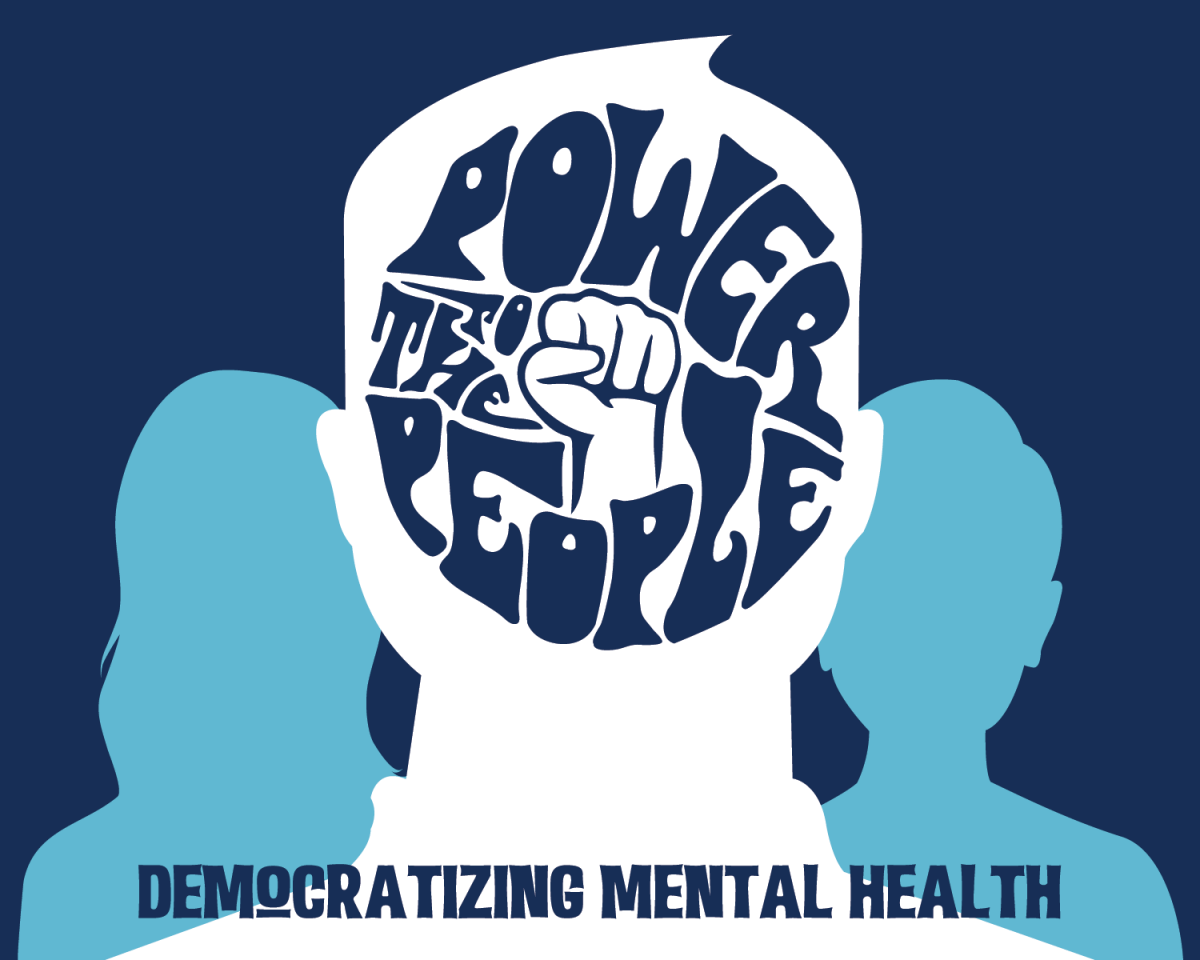
Sometimes naming a movement makes it more real. My name for this one is the democratization of mental health. There’s no one leading this movement, nor could there be. The whole point is that it is decentralized. I even hesitate to call it only a cultural movement; it feels more evolutionary than that, more biological. At its heart it is about the larger nervous system of humanity caring for its members in more deliberate ways.
I see it everywhere. The not-for-profit support group my friend Jacqui started for other parents of children with behavioral challenges. The body-doubling creative work and sharing sessions that my partner Sarah does with other writer friends who otherwise feel isolated and adrift. The rise in local men’s groups, helping participants get vulnerable and actually talk about their problems. The half-dozen WhatsApp groups started by attendees of my retreats, who meet regularly to meditate and connect. Every week I get emails from people starting different local support initiatives in schools, in hospitals, in workplaces – in their own living rooms.
And this is only the tip of the iceberg. A quick survey of your own network will no doubt yield many more examples. These initiatives all share several features:
They’re accessible: accessible language, accessible costs (often free), accessible networks, and accessible practices.
They de-stigmatize mental health problems and conditions.
They’re generally member-led, not expert-led.
They involve either implicit or explicit practice (more on that below).
And finally: they have positive impacts on the mental and emotional and spiritual well-being of participants.
There have always been powerful group social bonds, from recovery programs to spiritual communities to sports teams. That’s not new. What’s new is the sheer volume of new small groups proliferating, the way in which they’re responsive to very specific mental health needs and local contexts, and the fact that organizers aren’t waiting for the right authority to sanction their existence. They’re just getting on with it, in a common-sense, roll-up-your-sleeves, it’s-ok-to-be-imperfect kind of way.
This isn’t trivial. It reflects a shift in the broader culture’s understanding of mental health, one we very much need at this moment.
How do you change a culture? I think it’s similar to how an individual changes their behavior.
Shift Understanding. You try to get clear about the flaws in the old understanding, so you can begin to view things through a more accurate and inclusive framework. In the case of mental health, the outdated way of thinking about it – the way I thought about it when I didn’t know any differently – is that mental health is an individual issue, and one you don’t need to think about until something goes wrong. Then, you go to an expert to get fixed: a therapist, or a psychiatrist, or, these days, a twenty-something shaman with a pipe full of 5-MeO-DMT. But mental health isn’t an individual problem; it’s inextricable from the health of the world around us. It’s also not a one-off fix, but an ongoing preventative practice that is inseparable from daily life. Much more to say here.
Change Behavior. Once you have an updated understanding, you need new behaviors to support that understanding. This is where practice comes in, both individual and group practice. Practices are the habits we choose. They’re about intentionally choosing where and how we place our attention, and then repeating that. The more we repeat, the more those new behaviors and ways of being are locked in. That’s what all these groups are doing, some more deliberately than others. There are certain core underlying attentional skills in any successful practice that can be known and cultivated; when they are, that practice becomes more powerful and creative and effective. I am very interested in helping people and groups do exactly this!
Build Community. Finally, to support and reinforce these new behaviors, it helps to have a community of people practising them together. We can detox in a recovery centre, but if we then return to the same environment, our unhealthy behaviors are likely to come back. The right community makes all the difference. Plus, communities are scalable: the ones I have in mind range from small friend gatherings to larger therapy groups and school classrooms all the way up to influencers building new platforms and hubs, all of them radiating a continuous signal of practice and connection and support. And so it goes, in ever-expanding concentric circles.
I think the understandings within both the theory and the practice of meditation have much to offer all of these groups. I also think there should straight-up be more meditation groups – many more, in schools and hospitals and workplaces and living rooms, all of them offering a steady rhythm of support to their families and communities. To that end, here is my updated and redesigned “Community Practice Activation Kit,” for would-be junior cult leaders everywhere:
I’ll write more about this next week, but for now, consider: what might it be like to start your own small group? Maybe a friend to meditate with on Saturday mornings, or five minutes of group practice before a work meeting. It can be very sensible and grounded. A slow-motion, down-home, very sensible and grounded revolution! Would a meditator do it any other way?
Please share in the comments. I’m curious how others think of the big picture of mental and spiritual health – where do you think individuals and groups can make the largest positive impact? What are your own best hopes – and best practices – in this regard? And what role have your own communities played for you, if any? Engaging with your ideas helps me develop and expand my own, particularly around articulating a different understanding of practice and mental health. It also gives me ideas both for new community support initiatives, and for new guided practices, so we can try on these new behaviors and ways of being for ourselves. There’s so much that can be done here; having all of you be more deliberately a part of this movement is one reason I started this community in the first place.
In today’s guided meditation, we experience what it’s like to be connected in a movement of connection and care.
Happy to be here friends!
Love,
Jeff

A few quick notes—
The next Do Nothing Project (DNP) live meditation is Sunday, June 7 at 8pm EDT. Link for everyone is here. The DNP is for paid subscribers three times a month, and free for everyone the first Sunday of the month. If the cost of a subscription is out of reach, full scholarships are available at info@jeffwarren.org. Replays are archived on Monday morning.
New to Home Base? We have over 75 free guided meditations in our audio library, over 60 extended meditations, over 365 meditations on YouTube, and a growing number of community practice videos. New writing, new audio meditations, and new live community gatherings happen every week.
Home Base is best experienced on a web browser (laptop or mobile), NOT the Substack app. The app is great for finding new authors who have much to say, and, like any social media platform, it will suck out your eyeballs and, eventually, your brain. Plus the more pubs you subscribe to (they automatically offer these after you sign up), the more Substack will flood your inbox. To manage Substack emails and notifications, read this.
Did you find me on Calm or Happier? While the meditations I made for the apps live on in perpetuity, I no longer record new meditations for them. My latest work happens here; becoming a paid subscriber is the best way to support that work. If you found this meditation and post helpful, but becoming a paid subscriber isn’t an option, you can also…
Many thanks!


