


Click above for this week’s guided meditation (extended version below)
Hey friends,
I want to start with some year-end gratitude. First, for my amazing team, Mylène and Joe, who help make this Substack happen each week, a not-inconsiderable amount of work. For my partner Sarah, who edits all my writing, gives me endless, patient support, and humours my late-night rants about the acausal nature of reality. For my two kiddos, Eden and Sasha, non-stop sources of delight and radical humbling; every day they show me something new about being human. Gratitude for my friend Lilli, the inspiration for beginning my Substack journey. Gratitude to all my meditation pals, especially Tasha, Seb, and Dan, who keep me honest (and, sometimes, employed). And gratitude for all of you, who continue to show up for both your meditation practice and for this community. Getting to know many of you has been an unexpected pleasure.
Home Base is a bit different than what happens elsewhere on Substack. Every week, we feature both a written post and a guided meditation. If the first is meant to provoke thoughts, the intention of the second is often to point us below thoughts, into our direct, moment-to-moment experience. Life is different from this place, in ways that are both utterly familiar and hard to describe. To know this, we need a practice. And to keep that practice going, many of us – myself included – need a rhythm of guidance and connection and support.
That’s what this place is all about.
This week, we’re on holiday. Mylène is heading to Montreal, Joe will be in Denver, and my brother’s family and my sister and our parents are all hanging out with us in Vancouver. Family good times! By which I mean: love and chaos, Hanukkah and Christmas, laughter and annoyance, all of it framed by the poignant sense of time passing faster than my dad can drink all the beer in my fridge.
We’ll be back next week, with new practices for the new year. For this week’s guided meditation, I’m circling back to one of my favourites: The Warrior and the Caregiver. Think of it as essential meditative training for the holidays and beyond. I’ve also had fun updating the essay (below) to capture my deepening understanding of equanimity. Finally, as an end-of-year bonus, I’m including the extended version of the practice, normally a paid subscriber perk.
Enjoy, my friends. May holiday cheer find you. I look forward to another year of sweet connections and existential tomfoolery.
xoJ
Updated: The Warrior and the Caregiver
In meditation, growth, healing, and transformation happen in two directions. One is OUT, an increase in our capacity to stay present for ever more of life. The other is IN, an increase in our capacity to care for ever more of ourselves.
I call these two aspects our Warrior and our Caregiver.
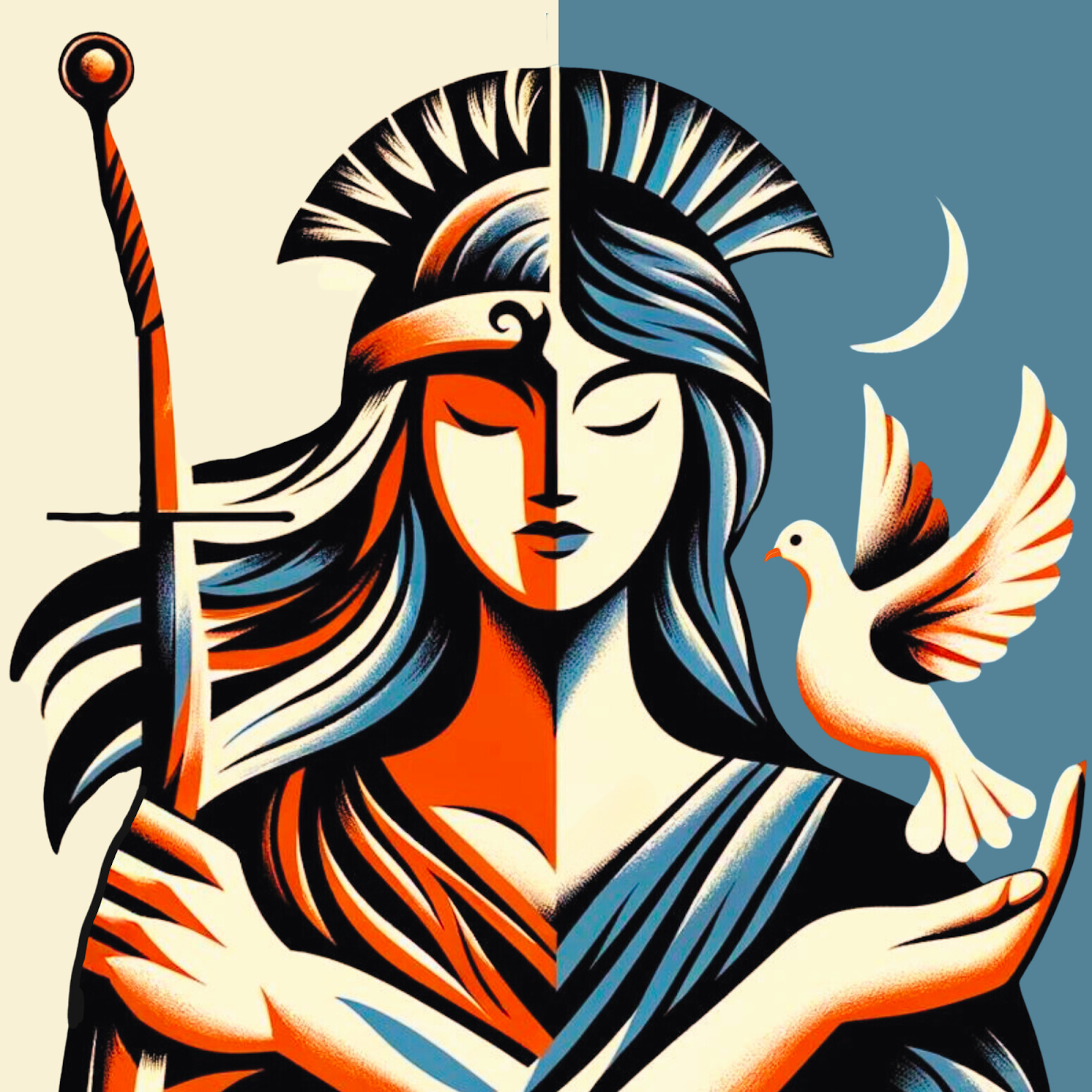
The Warrior goes out into the world. She dons her doctor scrubs, takes a deep breath, and steps into the ER. The Warrior hears her baby cry in the middle of the night, and even though she hasn’t slept in six months, she gets up to offer comfort. The Warrior notices discomfort and emotional pain in meditation, and instead of throwing in the towel, she finds the inner strength and poise to accept this too as part of the experience.
The Warrior is where we grow capacity in the face of challenge. It’s also how we heal old patterns and trauma and trapped reactivity: we notice, accept, integrate, expand.
The primary tool of the Warrior is equanimity. What the heck is equanimity? It’s a way of spaciously relating to the changing material of experience – sights, sounds, sensations, thoughts, feelings, all of it – without reflexively trying to push away any parts we don’t like, or grab on to any we do. From this more open place, we have more creativity to respond. The more equanimous we are, the more free that response is. By contrast, the less equanimous we are, the more trapped we are in reactive habits – habits that, as any experienced meditator will tell you, seem to mostly amplify our suffering and angst and sense of isolation.
I like one of the Pali words for equanimity: tatramajjhattatā, meaning “to stand in the middle.” We can train ourselves – via meditation, among other practices – to be ever-more present in the middle of life, while also, paradoxically, being ever-less subject to the constraining conditions of that life. If “standing” makes equanimity sound static, that may have more to do with what’s lost in translation, and the passive optics of meditation. Equanimity-in-action is not about detaching from the energies moving through and around us, it’s about riding them. It’s a state of dynamic engagement with self and world, of endless becoming without ever needing to arrive. And because there is more suppleness and smoothness, there is more capacity, in more kinds of situations.
The Warrior can do that?
Hell yeah! The Warrior is cosmic, nimble, endlessly adaptive. The Warrior is freaking enlightened!
And, let’s be honest: this particular Warrior may also be a bit deranged. Because who can actually live up to this ideal?
No one, that’s who.
Life is always waiting to kick our asses in some new way, to push us out of our window of tolerance into something impossible.
What then?
That’s when our Caregiver comes in. The Caregiver is the intelligence that understands our limitations. The Caregiver listens to signals coming from ourselves and the world, and responds by moving us to a safer and more nourishing place. The Caregiver is an earth-bound realist. How over-extended am I right now? What are my boundaries? And what sensible things have I learned about how to care for myself?
This might look like lying on the floor for five minutes and focusing on our exhale. It might look like going for a walk, or calling a friend, or binging on Netflix. It might look like drinking a damn glass of water. All coping strategies have their place, says the practical Caregiver. (So long as we’re not too fixated on them!)
What matters is that we give our nervous systems a break, so we’re better able to meet the next trial, and the next opportunity. Otherwise we get stuck in the familiar Warrior cycle of white-knuckling it through scenario after scenario, bearing down ever-harder, creating ever-more stress and friction and brittleness and reactivity and fixation until the whole system (ie, our body, our family, our life) shatters.
To really show up, we have to slow down. The Caregiver knows our urgency isn’t sustainable over the long-term, and has the equanimity to let go in the moment.

The intensity of life right now is our collective training ground. We need both our Warriors and our Caregivers. Equanimity lives in the balancing.
Thank you for your practice, friends.
Jeff
PS – Trying to understand equanimity, trying to live more equanimously, has been the single greatest learning of my life. Everything else happens within that. Not only am I still learning, I’m pretty sure that learning will never end. If the possibilities and confounds of equanimity are compelling to you as well, I recommend a new book by researcher and psychotherapist Michael Uebel: Seeds of Equanimity: Knowing and Being (Mimesis, 2025). My new favourite bedtime reading. Thank you Michael, for the fresh inspiration!

Click below for the 14-minute extended meditation

A few quick notes—
New to Home Base? We have over 70 free guided meditations in our audio library, over 60 extended meditations, over 365 meditations on YouTube, and a growing number of community practice videos. New writing, new audio meditations, and new DNP live community practice sessions happen every week.
Did you find me on Calm or Happier? While the meditations I recorded for the apps live on in perpetuity, I no longer record new meditations for them. My latest work happens here; becoming a paid subscriber is the best way to support that work. I give paid scholarships to anyone who asks (email info@jeffwarren.org). If you found this meditation and post helpful, but becoming a paid subscriber isn’t an option, you can also …
Many thanks!

CEC 2026 New Year’s Virtual Meditation Retreat
January 9-11, 2026
Online via Zoom

Join the Consciousness Explorers Club teaching team - including Jeff - as we start 2026 fresh at this New Year’s Virtual Meditation Retreat. We’ll explore practices that wake us up and settle us down and renew our commitment to practice for another year. Free registration for all who donated over $150 to the CEC during our recent fund-raiser.
Thank you Jeff!🙏
The perfect meditation for all of our exhausted “holiday souls” trying to be “good warriors” in the face of so much collective suffering.
Beautifully articulated
Beautiful message
Beautiful reminder to take time to nurture ourselves and to remember that even good warriors need some TLC!❤️
Love you Jeff and appreciate you taking such good care of us! Think I’ll go have another little cry now and know it’s OK! 😁❤️🎄
Jeff, your thoughts on the essence of the Warrior and Caregiver states are so wonderfully nuanced and expansive. I found myself pausing repeatedly, slowing down to take it all in. Finding balance between the two, the complexity of seeking equanimity, is at the heart of it. Yes, standing in the stream
I’m now at the point in my life where my parents are long gone, and my child is nearly forty, so life is simpler and I have the gift of time to reflect. Not so much to look back, but to learn how to live the remaining years with more grace, learning how to balance my warrior self with the caregiver.
I’m deeply grateful for you and the wonder that I stumbled across this community.
Best wishes for a delightful, if chaotic, visit with your extended family.
Tamar