

Click above for this week’s guided meditation
Hey friends –
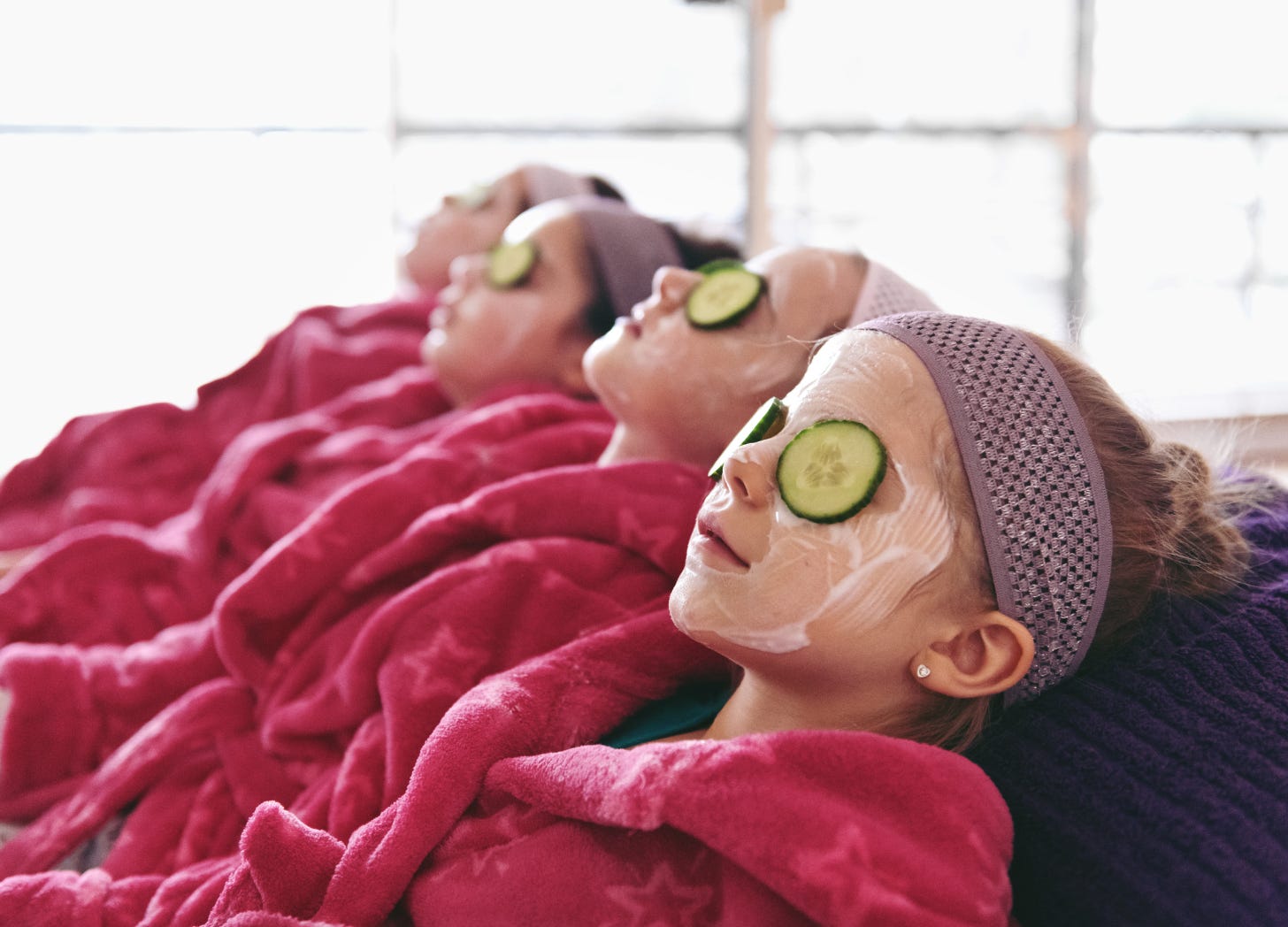
My creative challenge to myself this week: write the most indulgent, indolent, triple-deeeluxe do-nothing meditation of all time, in all dimensions, for all cuties (this means you), forever and ever, Amen. For when you’re thoroughly fried. For when your brain feels like mush. Or, to borrow a fine expression from chronically ill and neurodiverse communities, for when you’ve got “no spoons.”
To balance this easy-peasy meditation, here are some bigger ideas to chew on, all of them circling around neurodiversity and the radical destigmatization of mental health challenges. This post includes some additional context for my upcoming neurodiversity-focused retreat, here:
Burnout and the World’s Demands
Burnout is the mental, emotional and physical fatigue that comes from doing too much, for too long, with not enough of the right resources or supports. I’ve been in it myself lately – not total collapse, more a work-parenting-mental health grind that has me feeling like I’m operating in the 60–70% range most days. Which means reactivity, physical and emotional health issues, and interpersonal family dysfunction. And I’m a meditation teacher!
I’m not sure anyone is exempt: student, gig worker, activist, doctor, caregiver, bureaucrat, insurance adjudicator. I even see stressed-out dogs – mostly little ones, high-strung, hyper-vigilant, making shivery freaked-out pees in corners. Short of hiding in a monastery, it’s hard to slow down life’s demands. (Even in monasteries, they make you wash your own dinner bowl!)
Fortunately, we can slow down our internal responses to those demands, all the more so if we have a practice: meditation, yoga, journaling, prayer, running, whatever works. A practice can soothe us in the middle of the intensity. And, maybe more importantly, some practices also help us get wiser about managing those intensities.
This leads to a problem that really interests me: how a lot of our misery and dysfunction stems from a mismatch between the demands the world places on us, and what we’re actually good at doing. It might be working in an office, or a specific parenting task, or a way of relating to others – something the world expects most of us to be able to do. But every time we do that thing, in that place, in that way, we get disproportionately worn down. We think it’s life that’s wearing us down, but really it’s just this one specific thing. If we could only see that specific thing more clearly, and understand why we’re having a hard time with it, then we might be able to change it, or at least change our relationship to it, and thus make a substantive difference to all the other things, everywhere else in our life.
You know what I mean?
Why Neurodiversity Is Relevant to Everyone
This is one reason I think the neurodiversity paradigm is relevant to everyone. Neurodiversity is a framework for understanding the human brain, one that views autism, ADHD, and other wiring quirks not as disorders, but rather as natural variations in cognitive and sensory and emotional processing. These differences lead to real challenges, yes, but many of these challenges can be met through changing the world’s expectations and environments, among other things.
I’ve been very inspired by the way people with neurodiverse traits have been refusing to accept life as it’s been presented to them. They’re getting louder and more unapologetic about asking for accommodations, about making meaningful changes to their work and relationships to fit how they actually are, vs some ideal of how they should be. As part of this, they’ve developed a keen nose for identifying both the specific things and situations that are most likely to burn them out, and identifying the specific thing within them that makes doing those things so ridiculously hard. As a neurospicy dude myself, with my own diagnoses, I find this empowering. Yes, I can shift things on the inside with meditation and other practices. But I can also shift things on the outside – provided I can get clear on where the sticking points are. None of which means I still don’t all have to do hard things in life. Obviously. Welcome to adulthood! The understanding is more that I (and everyone) can do it better.
Invisible Spectrums
When I make a broad inquiry into all of this, it seems there are invisible spectrums of ability and sensibility along which every human being is organized. I’m borrowing the term “spectrum” from Autism Spectrum Disorder (ASD), a condition that affects more people than previously realized, and which we’re beginning to understand better (though we have a long way to go). In a way, we’re all on various spectrums: of sensitivity and sociability and steadiness, of attentional and learning and memory differences, of emotionality and motor coordination and time perception, and much more.
I find this fascinating. Can someone please put all this into a 3D diagram that we can all carry around in our back pockets? It would be like having a field guide to human internal variation. Each person we meet, spread in some unique way through and across these different ranges – a bit like a fingerprint, or maybe a squiggly multi-dimensional octopus.
What if we could make these differences more visible?
Mind-Body Literacy
We can: through mindfulness, through therapy, through reading, through sharing our experiences and hearing others share theirs. We can develop our mind-body literacy.
And when we do, we get eurekas. Like “Oh my God, no wonder I can’t operate in this shared office space – I’m being scraped raw by the flickering fluorescent lights, plus the social pressure to relate is so awkward for me that I’m overwhelmed by noon!” Well isn’t that interesting. There may be a simple fix – a tweak to the environment here, a candid conversation there. Or there may not be. But no situation needs to stay static. We can learn to accommodate how we function and how we feel, and – just as important – how other people function and feel.
Developing this kind of literacy matters. As we get better at understanding how we are, we get better at managing our energy, our resources, our jobs, and our relationships. The alternative – especially for those already struggling with fitting our difference into the world’s expectations of “normal” – can be a brutal slide into serious mental health conditions, from depression to chronic anxiety, addiction, even psychosis.
Along with other marginalized communities, neurodivergent humans are canaries in the coal mine. We live in the shadow of our culture’s blind spots and assumptions. When we’re not supported, we end up putting enormous pressure on our families and social safety nets. You can see this today in schools, with the rise in mental health diagnoses and increasingly unmanageable classrooms.
Yet when the outliers are supported properly, these same people can end up being the exact medicine our society needs to heal itself. The empaths, the visionaries, the change-makers. Think of it: all that creativity and sensitivity and fresh perspective suddenly channeled into the collective good. Or if not the collective good, at least channeled into making awesome music! (also a collective good 😆)
Radical Destigmatization
I admit I get a bit Utopian when I think about all this. It points to the radical destigmatization of mental health issues, for everyone, everywhere. Dreaming about exactly this is my motivation for co-creating something I’ve never done before: a meditation retreat specifically for neurodivergent humans, where the emphasis will be on self-regulation, learning the quirky ways we’re wired, and owning all of it. I could not be more excited.
In Part Two of this post, we’ll explore a neurodiversity-inspired practice for inquiring into a specific challenge, and whether any realistic adjustments can be made in how we approach it.
In the meantime .. let’s enter the mind-body spa, and empty our hard-working brains, and do nothing whatsoever.
Love,
Jeff

A few quick notes—
New to Home Base? We have over 70 free guided meditations in our audio library, over 60 extended meditations, over 365 meditations on YouTube, and a growing number of community practice videos. New writing, new audio meditations, and new DNP live community practice sessions happen every week.
Did you find me on Calm or Happier? While the meditations I recorded for the apps live on in perpetuity, I no longer record new meditations for them. My latest work happens here; becoming a paid subscriber is the best way to support that work. I give paid scholarships to anyone who asks (email info@jeffwarren.org). If you found this meditation and post helpful, but becoming a paid subscriber isn’t an option, you can also …
Many thanks!

Meditate, Relate and Creatively Self-Regulate
July 16-19, 2026
Art of Living North Carolina

This retreat is about not being the only weirdo in the room. Everyone here will be the weirdo in the room! Including your two teachers, Jeff Warren and Ofosu Jones-Quartey (Born I). What unifies us is the sense that our brains are wired differently, and those differences have brought both real challenges and real creative opportunities.
Wow .. Saturday morning here in the UK .. what feels like the first sunshine ☀️ of Spring.. I sit in a sunny spot looking across my garden .. and just bliss out to this !
Thanks Big J for these small miraculous doses of kindness !
I always read your posts when the come in on Friday and look forward to sitting "with you" on Saturday. Between reading this and waking up this morning I developed a wicked snotty headcount, so as I was digging around for some cold meds this morning, bizarrely found a pealable face mask and spa like foot scrub booties (I swear I have never seen these things before, it took me a while to figure out wth the bootie things were). I laughed out loud and realized that this means that I CAN have a super deluxe spa day meditation today. Thank you universe 💅 p.s. adding "burnt out cutie" mugs/tees to the growing list of dream merch for folks working in the social sectors.