


Click above for this week’s guided meditation
“Anything is hard to find / When you will not open your eyes / When will you accept yourself?” - The Smiths
Hey friends,
A long(ish), slightly rambly personal post today. If you’re not in the mood, please disregard and go straight to the meditation. I’m in a healing state of mind, as you’ll read below. It feels good to let imperfect words flow. I’m accepting that about myself. Here we go.

For a few weeks – maybe months? – I’ve been feeling a bit stuck, a bit oppressed. Often not consciously, not in a way that’s prevented me from getting on with the stuff of life. But still there, throbbing away in the background. Stuck in a story that judged my prickly parts, my tendency to retreat into books, the various ways that I feel I don’t show up as a father and partner according to my own ideals of how a father and a partner should be. My partner has been stuck in something similar; in fact our personal cycles of dissatisfaction were feeding off one another.
We kind of knew it was happening, but we also didn’t know; at least, we didn’t know the extent to which we ourselves were driving the dynamic. We only knew there was a “problem” that needed fixing, and the sense of living with a problem that needed fixing was actually compounding the problem, making everything that much more oppressive.
Getting stuck in this kind of pattern happens to everyone. In fact, it’s so common we think of it as normal. It’s normal to be a bit down on ourselves. It’s normal to be a bit down on the world (and sometimes feeling down about the world is also about ourselves – that we’re not doing enough, that our outrage isn’t universal, etc).
Yet normal doesn’t mean trivial. Hurt builds; it compounds. A low-level sadness becomes the norm – or shame, or anger, or anxiety. It radiates out, affecting our relationships, creating distance, alienation, conflict. It’s fashionable in certain circles to make fun of self-help, as if the huge interest in the subject doesn’t come from genuine desperation. When our worries cut ourselves off from the people around us, we can lose the sense of why living matters. I’ve seen it again and again, all the way through to some truly terrible ordeals and endings.
How do we pull out of these patterns?
Five days ago, the agonizing dropped away for both me and my partner. The house feels different now – more joy and ease and connection and space. Change feels possible.
I thought I’d try to articulate how it happened. The dynamics point to something Gestalt therapists call “the paradoxical theory of change.” Only by accepting how we are, the thinking goes, can we begin to change how we are. And when we’re genuinely open to change, we may find a renewed sense of freedom and possibility.
I’ll describe it as a two-step process.
Step one is seeing. As a meditation teacher, I wish I could say “Hey, just notice how you are,” and suddenly everyone would be able to perfectly see the story or pattern that they’re in. But I can’t do that myself. Insights don’t happen on demand. They’re usually more sidelong, like unexpected eurekas (if eurekas were expected, then they wouldn’t – by definition – be eurekas).
So maybe we’re reading, or having a conversation, or we’re in the shower. Or maybe we’re meditating. Insights come when our minds are elsewhere, or even nowhere (one reason it’s so helpful to meditate). From a place of comparative distance, we suddenly realize, ‘Oh yeah, I have been feeling stuck.’ Or ‘I have been twisting myself in knots trying to be something I’m not.’ Or ‘I have been expecting something to go a particular way, and because it’s not going that way, I’m sort of pissed all the time.’
You know?
Suddenly we see the truth of something: I have been relating to the world through this pattern. Omigosh: I see.
For myself, sitting in my reading chair in the corner of our living room, I suddenly saw how I was fighting this part of myself, how I had an idea that my withdrawing from my boisterous family into this corner was bad, and every time I did it I felt shame, and kind of knifed myself in the heart about it, again and again, which of course made my reading much less satisfying, and also made me want to withdraw even more, and feel even more miserable, and so on and so forth into the usual psycho-spiritual death spiral.

Step two is self-acceptance, which has a bunch of components. This can happen in a flash, or not happen at all. We can see the stuckness of our situation but have the insight end there. In fact, sometimes when we see something we don’t like about ourselves, we feel extra resigned and end up even more stuck.
What allows us to accept and fully shift our stuckness is kind of a mystery, at least in terms of timing and the depth of the letting go. But one thing for certain is practice helps. Especially acceptance and self-compassion practices. ‘It’s ok, welcome welcome, I accept this moment, I accept myself the way I am’ type thing (see this week’s meditation). It greases the wheels. Even if the practice itself can sometimes feel rote or insincere, with repetition it can create a habit of care that takes over when the occasion presents itself.
What also helped me accept, in this particular case, was a sudden recognition of the universality of my struggle. This feeling of common humanity was there in the background, like: ‘Oh, right, everyone’s struggling with something, and this is just my thing.’ I popped out of the pattern into a sense of being in good company. The fact that I’d been stuck this way filled me with compassion for everyone else who gets stuck in their idiosyncratic ways, a lovey-lovey vibe that then really interrupted the cycle, and led me to passionately share my feelings with my wife, who immediately connected it to her own process, and experienced her own insight and letting go, and so it goes with the viral nature of interconnectivity. Magic.
One of the things that’s profound about acceptance is only a bigger self can accept a smaller part. So when it happens, it comes with a slightly larger sense of space, a wider view. And this can have a quality of non-identification, like: ‘Oh, this problem isn’t all of me.’ Either it’s a passing weather system that we get stuck in from time to time, or it’s a real challenge now positioned inside a much bigger landscape, with space between elements, all of it more workable than previously imagined. It can all be here, it’s all allowed to exist, including ourselves.
Relief. We can breathe again.
This, finally, is where real change can happen. Not from a sense of what’s wrong, but from a sense of what’s right. In this bigger room of our being, we have more resources than we thought. We don’t need to change any one thing, including that thing, so it becomes less all-encompassing and may even recede altogether. And so we do change – by not needing to. It’s a paradox. We’re also more awake and alive to the changes that are already happening, moving us forward without us needing to do anything about it.
If we can truly let go of the need to be any specific way, then we free ourselves up to change right along with life. The whole question of our identity and our apparent limitations becomes a lot less interesting. Content to be a mystery to ourselves, we’re finally free to join the larger mystery of everything else.
Or something like that. I’ll let you know if I ever get there!
Notes from the armchair in the corner of my living room, which I no longer feel bad about withdrawing into. Although now, funny enough, I feel like spending more time with my boisterous family, so that’s where I’m headed.
Thank you for reading.
Next week, we explore care and mutuality and other good things. For our meditation this week, a new version of “Welcome to the Party,” with an emphasis on radical self-acceptance.
Happy to be with you in 2026.
Love,
Jeff
PS — Acceptance is also the monthly theme over at the Consciousness Explorers Club. Check out Erin Oke’s beautiful essay on “F@%kceptance” and what it means to accept the hard things of the world and ourselves. Erin also shares the final update about our successful CEC fundraiser, so thank you again to everyone who so generously supported us in our time of need!
The CEC‘s virtual winter retreat starts tonight, join us!

A few quick notes—
New to Home Base? We have over 70 free guided meditations in our audio library, over 60 extended meditations, over 365 meditations on YouTube, and a growing number of community practice videos. New writing, new audio meditations, and new DNP live community practice sessions happen every week.
Did you find me on Calm or Happier? While the meditations I recorded for the apps live on in perpetuity, I no longer record new meditations for them. My latest work happens here; becoming a paid subscriber is the best way to support that work. I give paid scholarships to anyone who asks (email info@jeffwarren.org). If you found this meditation and post helpful, but becoming a paid subscriber isn’t an option, you can also …
Many thanks!

THIS WEEK ON THE MIND BOD ADVENTURE POD
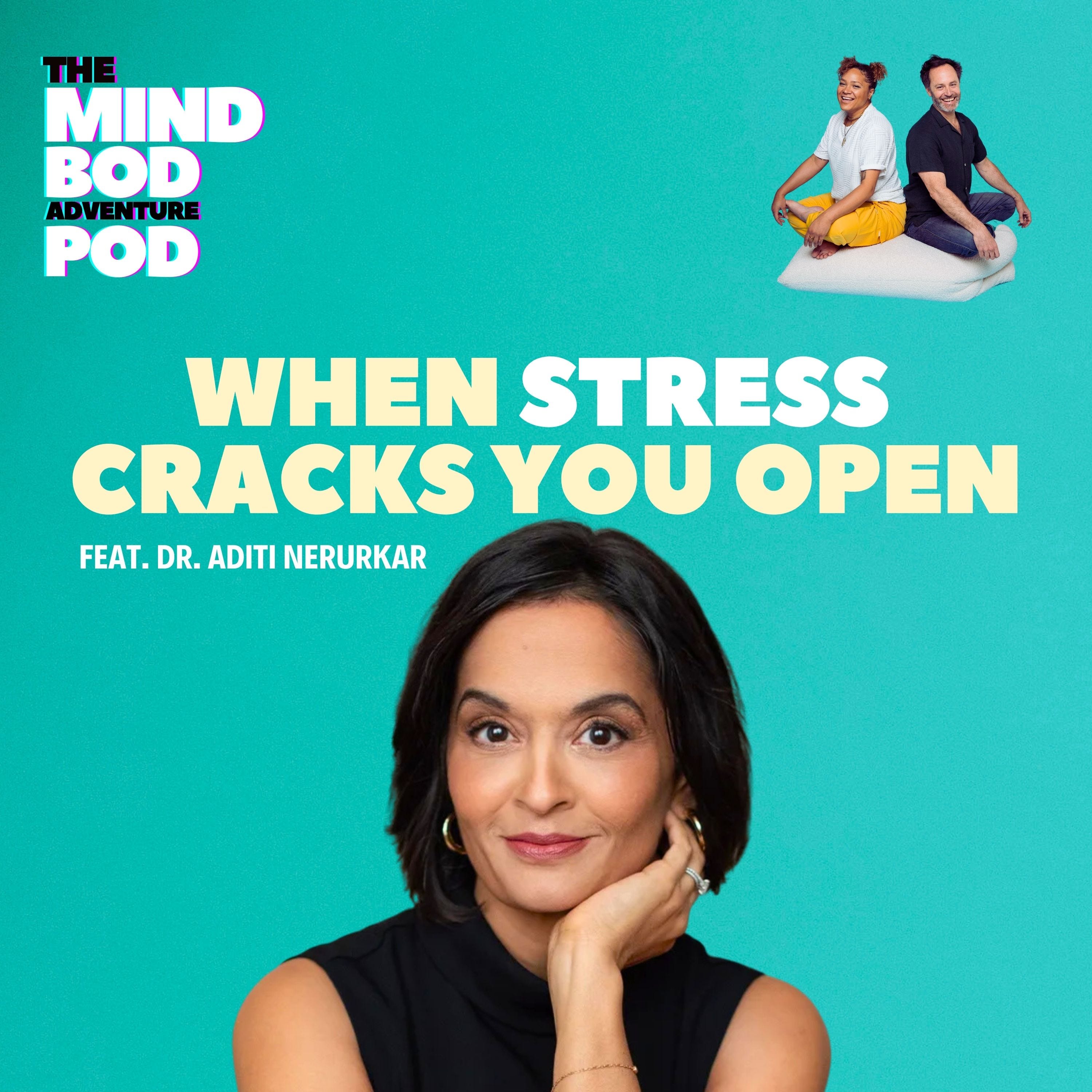
This week we sit down with Dr. Aditi Nerurkar, MD, physician, Harvard Medical School faculty member, and author of The 5 Resets: Rewire Your Brain for Less Stress and More Resilience. We talk about what stress actually is, why it gets so dismissed in medicine, and what to do when your diamond finally cracks.
Jeff, One of the many reasons I turn to your meditations each day is your openness about your personal struggles. By sharing your experiences you teach us how the practice of sitting helps us become better humans. One thing I’ve noticed when I welcome in those uncomfortable moments of awareness is that I have an intensely physical reaction — an indication to me that I’ve connected with honesty. It’s a relief to recognize what is there, accept it, and begin to work with it. Often, muted echoes of that discomfort remain, but I can let them pass by me in the stream. Always grateful for your teaching.
Man this is so so so helpful to me in this moment. Sometimes (most times really) I feel so isolated and alone in my self flagellation, like no one else can possibly feel these feelings. But intellectually I know that can’t be true. I know there’s no way I’m alone in this. Me knowing that in more of a somatic way, in my body would be helpful.
The world and our country here in the U.S is absolutely heartbreaking right now and I’m just so grateful to be connected to you and your so-called “ramblings” because those ramblings help me feel more sane. And I’m grateful for that. ❤️