



“It is a radical act to reclaim your own attention and turn it to the natural world.” - Robin Wall Kimmerer
Yay America! Good job getting your shit together (ish). Now, it’s time to give everyone’s attention a break from human shenanigans, and redirect to nature for a while.
I’m a big fan of Potawatomi botanist Robin Wall Kimmermer, who writes about how our chronic sense of “not-enoughness” in the West has a lot to do with where we place our attention. Too much time looking at the urgency of our (human-made) problems, not enough time on the dazzling abundance of nature. To really notice nature – and her many creaturely denizens – is to prepare the ground for a different kind of relationship, one based on reciprocity and mutual care and gratitude.
Truly committing to this over the long term could transform our civilization. For real. The insights are there already, just waiting to be recognized. But we have to slow down to let them in.
That’s my invitation this week. A guided meditation meant to be done while connecting to the natural world. Next to a tree, or your garden, or on your couch with a cat or dog or cooing baby monkey-human on your lap. Or … just sit with your own creatureliness. The animal in you.
The meditation ends with a prompt to imagine how different creatures experience life, and to notice what considering their perspective may open up in us. If you’re intellectually curious about the science of animal experience, much has been happening in the field. Where once it was considered flaky anthropomorphism to speculate about animal consciousness, these days there’s more openness and curiosity among both scientists and amateur naturalists. Cue the booming octopus publishing industry, and fifty books about trees, and Michael Pollan tripping about Gaia on plant medicine. To that end, I’m including a short nerdy journalistic piece I wrote some years ago about animal experience and human empathy and imagination. The basic argument is that relating to another creature’s perspective is a practice, one we can get better at over time. It begins with attention.
Let’s go be animals.
Jeff
Relating to Animal Experience
“The imagination is not a source of deception and delusion, but a capacity to sense what you do not know, to intuit what you cannot understand, to be more than you can know.” - William Irwin Thompson
Thirty years ago, if you mentioned animal consciousness at a psychology conference, you’d risk getting cattle-prodded by an angry behaviorist. Animals were mostly regarded as stimulus-response machines, devoid of inner life. Dissenters were few and far between.
Times have changed. Animal cognition is all the rage, closely followed by comparative neurobiology. In July 2012, a consortium of well-known neuroscientists issued “The Cambridge Declaration on Consciousness in Non-Human Animals,” as public an acknowledgment as you are likely to find on behalf of science that, yes, it seems that animals do in fact possess consciousness, or at least they possess the “neurobiological substrates” necessary to support it.
The Anthropomorphism Taboo
Despite this new openness, when it comes to our relationship to animals, a lot of scientists are still held back by a taboo against imagining we can relate to animals in the first place. They cite the philosopher Thomas Nagel, who in a famous 1974 essay, “What Is It Like to Be a Bat?” argued that, yes, it is like something to be a bat, but as humans we are largely cut off from that experience. We can simply never know what it is like to be another animal; our mental resources, he writes, “are inadequate to the task.”
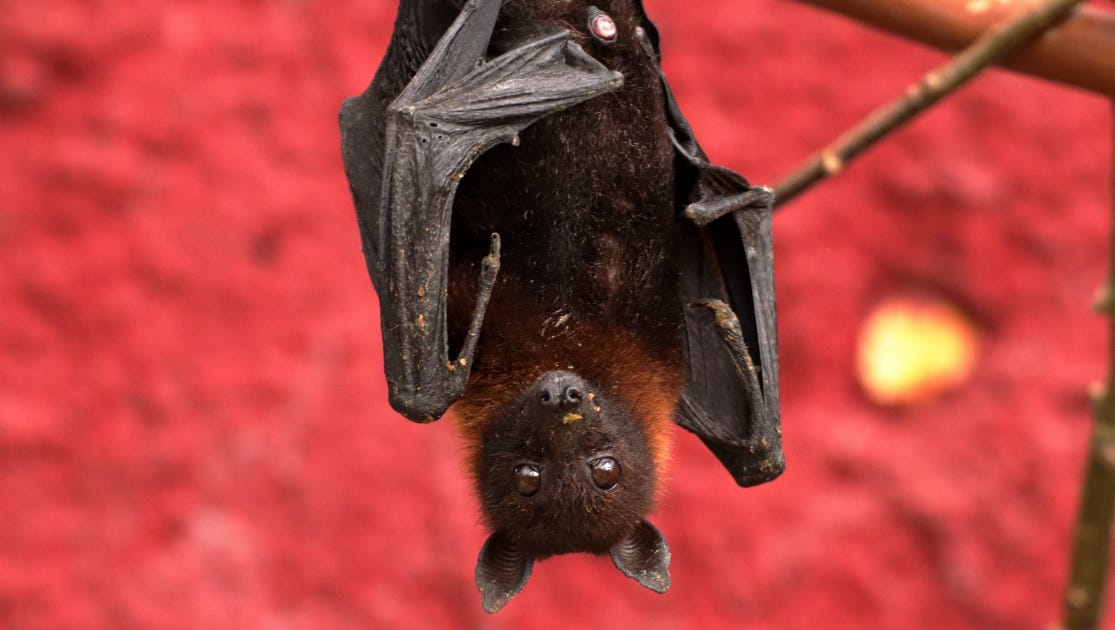
Nagel’s paper is an elegant defence of the integrity and irreducibility of inner experience. It was a position that needed to be staked out, for then – as now – many reductive materialists believed that everything important about consciousness could be described by looking at brain-based external measures.
However, in making this important point about consciousness, Nagel inadvertently erected an ideological wall between ourselves and the rest of nature. For it is not true that we cannot say anything at all about what it’s like to be a bat, or, indeed, any animal. As the philosopher Ralph Acamporo says about our scaled and furry cousins, “It doesn’t follow to say that since we don’t know each other fully, we can’t know each other at all.”
Inspired by the Cambridge Declaration, I would like to propose my own declaration on behalf of human imagination and empathy: The Declaration of Animal Relatability. It hinges on a model I’ll call “The One and the Many.”
The One and the Many
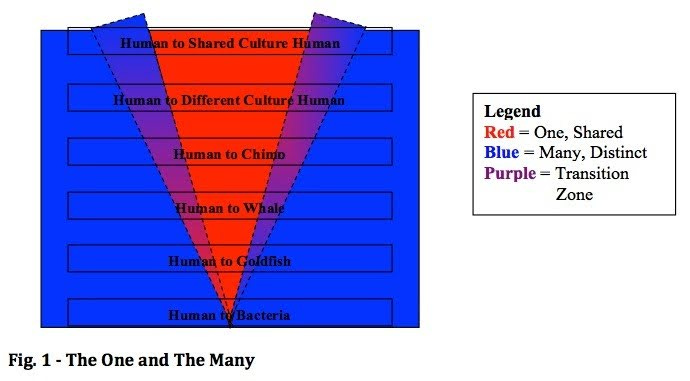
The idea is that, yes, obviously there are private aspects of another organism’s experience that, due to the constraints of our biology, we cannot fully know. We have to respect that; indeed, it should be celebrated. Darwin’s “endless forms most beautiful” is as true of the inner as it is of the outer.
But there are also elements we can know and understand. Since we’re all descended from a common ancestor, there is always a measure of shared experience conserved in body and mind. This makes perfect sense regarding our closest relations. From an evolutionary standpoint, if a big-brained mammal acts similar to us under similar conditions – if they squeal in pain, or nuzzle affectionately – then it makes sense that some part of the psychology behind their action is similar to ours.
The primatologist Frans de Waal says those who reject this obvious insight are in “anthropodenial.” In their groundbreaking work, How Monkeys See the World, the biologists Dorothy Cheney and Robert Seyfarth point out that for field naturalists, a certain amount of anthropomorphizing actually works. “Attributing motives and strategies to animals,” they write, “is often the best way for an observer to predict what an individual is likely to do next.”
A Feeling for the Organism
The key point here is this: our ability to relate to an animal’s experience shifts in proportion to the species in question. So the core we share with a bacterium is far narrower than that we may share with a whale, which in turn is perhaps narrower than that we share with the chimp. In a sense, the human-to-animal mind question may simply be an exaggerated version of the human-to-human mind question: we can never entirely know another person’s experience – all the more so if they’re raised in a different culture – but there are deep points of overlap that can, crucially, be expanded.
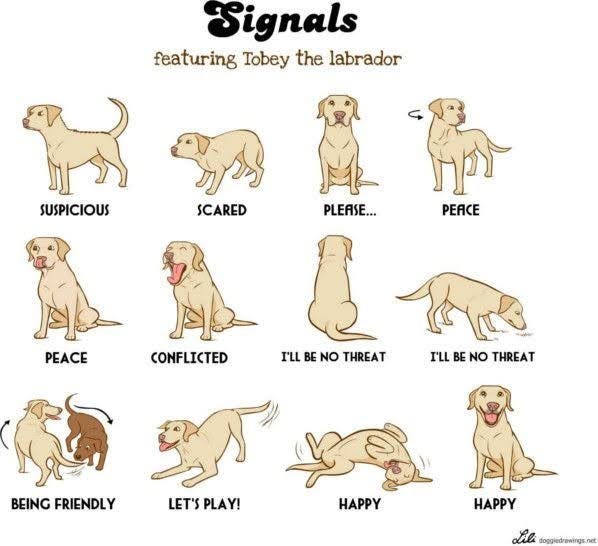
This last point is important. The ratio of one to many, of the shared to the private – it isn’t fixed. There’s a malleable area between the two that can be expanded. Like anything else, relating to another being’s perspective is a practice.
Spend enough time with dogs and you start to get a feel for what makes them sad or excited, for how they move in space, little hints and suggestions of their experience. For most of us this understanding is vague, but for pet owners and dog trainers, it can be intimate and immediate and very accurate.
“A feeling for the organism” is how the famous geneticist Barbara McClintock described her own intuitions about life. Empathy as a capacity needn’t end at the Homo genus. It seems to be more a question of how much energy and intelligence and openness we bring to the inquiry. Obviously, the further away we get from the human, the more room for projection and distortion – this is a genuine risk – but this doesn’t mean there isn’t also a real sensitivity that can be cultivated.
Ways of Expanding Human Sensitivity
And indeed, when you pan out to the big picture of human knowledge, what you see are multiple lines of inquiry converging on this exact point. From the scientific world, we have the study of animal cognition and communication, as well as more cutting-edge domains like the study of animal sense worlds (“umwelts”) and embodied cognition. From the philosophical world, investigators are beginning to elaborate a whole series of intriguing approaches, from “affordances” to the phenomenology of “inter-being,” to name just two ideas. All of these lay the groundwork for a kind of radical perspective-taking; they are different ways of illuminating sensibilities once dismissed as opaque.
Non-Westerners, too, have their own insights, particularly animistic people that have remained in close relationship with nature. The Hopi, the Yanomani, even the Balinese – very different cultures that all describe some form of active reciprocity between humans and the natural world. Some of these cultures inform us that we can learn to pay attention to intuitions gleaned from other modes of consciousness via dreams and visions and psychoactive plants.

Finally, there’s the role of imagination. In Gaia: A Way of Knowing, the poet and critic William Irwin Thompson argues that imagination is a legitimate form of knowing and sensing – in his excellent phrase, “a transform of awareness from other dimensions of sensitivity.”
We can and should learn to trust this more free-form style of awareness – it is the means by which we’re able to dramatize any interior, as every novelist and filmmaker and artist knows (even Nagel admits as such in one of his paper’s footnotes: “imagination is remarkably flexible”). Art opens new channels of intimacy and helps us formulate fresh questions and avenues of exploration. There have been many terrific works of fiction and non-fiction released over the past few years about the inner worlds of different animals. I think they’re part of an expansion of human consciousness. They give me hope.
So: What IS it Like to be a Bat?
Some kind of airborne swoop in the belly. A feeling of tautness across the chest as the wings fold back. Sounds that part the space, a sense of surround and presence and immediacy. Appetite. A sense of satisfaction, and aversion, and pain. A humid radiance in the head. Wind. Sleep and sleep-focused sniffing. Twitching in the face, larval purring in the throat. Something else, something more, something less.
I don’t know what it’s like to be a bat. But I do know what it’s like to be a breathing and moving and sensing body in the world – we all do. That counts for something.
Our models will improve as the science improves – the neurobiology, the sensory ecology and all the rest. They will also improve the more time we spend with animals, and the more risks we take with our empathy and our embodied imaginations.
Self-consciousness may be a rare trait, but all of nature experiences; in every being there is something we can relate to, whether it’s the purring of a cat, the intent gaze of a bird, or even a tree’s upward reach towards sunlight. The degree to which we honor this intimacy with our fellow creatures is the degree to which we will truly feel at home on this planet. Their lives – and perhaps our own – depend on it.
END
p.s. - Curious to read more about this subject? Here’s a longer feature I wrote about what it’s like to be a 40-ton echolocating sperm whale. It won an award!

A few quick notes—
The next Do Nothing Project (DNP) live meditation is Sunday, November 8 at 8pm EDT. Link here. Live DNPs are for paid subscribers three times a month, and free for everyone the first Sunday of the month. Numberless scholarships are available at info@jeffwarren.org. All replays are archived Monday mornings and available free on Home Base and YouTube.
New to Home Base? We have over 100 free guided meditations in our audio library, 80 extended meditations, 365 meditations on YouTube, and a growing number of community practice videos. New writing, new audio meditations, and new DNP live community practice sessions happen every week.
Did you find me on Calm or Happier? While the meditations I made for the apps live on in perpetuity, I no longer record new meditations for them. My latest work happens here; becoming a paid subscriber is the best way to support that work. If you found this meditation and post helpful, but becoming a paid subscriber isn’t an option, you can also …
Many thanks!

Meditate-a-thon: Fund Kids’ Medical Aid in Gaza
December 12, 2026 · 9 AM – 9 PM ET - Online

Sit-Heads Meditation Club in Brooklyn (“A Serious Meditation Group for Non-Serious People” - my people!) asked me to pass along this invitation: Please join us for Sit for Gaza on December 12, a worldwide “meditate-a-thon” to fund medical aid for local kids.
Meditators sit for as long as they can. Sponsors pledge dollars per hour of meditation. Every dollar goes to the Palestine Children’s Relief Fund, a non-political, non-religious humanitarian group focused on providing specialized paediatric medical care, cancer treatments, and mental health programs to children in the Middle East. Last year Sit Heads raised $19,000.
You can support (1) by pledging money, or (2) by sitting on December 12, in-person or virtual. All donations are tax-deductible. It’s a great cause; I’ll be meditating on December 12th, join me!


